Aurubis


Aurubis has been producing copper and other metals that are indispensable for modernizing our lives for over 150 years. After all, smart and networked developments cannot function without metals - regardless of whether we are talking about renewable energies, e-mobility or digitalization.
The procurement and production processes are highly complex—involving raw materials from more than 30 mines worldwide in over 50 material grades. To ensure stable production despite these challenges, Aurubis first collaborated with celver AG to develop an integrated solution for concentrate planning based on Board. In the next step, the system was expanded to include Sales & Operations Planning (S&OP) in order to better account for demand fulfillment.
The Company: Metals as the Foundation for Progress
For over 150 years, Aurubis has been producing copper and other metals that are essential to the modernization of our lives. After all, smart and connected technologies cannot function without metals—whether in renewable energy, e-mobility, or digitalization. The company’s core expertise lies in processing and optimally utilizing complex concentrates and recycled raw materials to produce metals of the highest purity.
Each year, Aurubis produces more than 1 million metric tons of exchange-grade copper cathodes with a purity of 99.99% across its European smelting network and processes these into a wide range of copper and copper alloy semi-finished products. Sustainability is a top priority and is firmly anchored in the company’s strategy. Already today, Aurubis relies on recycled materials for 50% of its metal production in order to optimally combine the goals of securing raw materials and protecting the environment. This proportion is set to increase even further in the future.
The facts at a glance:
✓ Higher-quality demand forecasting based on statistical forecasts and AI
✓ Automated and transparent processes
✓ Intuitive usability
✓ Improved delivery reliability through optimal inventory levels
The challenge: Balancing demand and production
Procurement and production processes in the metallurgy industry are extremely demanding. Aurubis, for example, sources its raw materials from over 30 mines worldwide. During production, 24 elements and 50 different material grades must be taken into account. This makes the procurement process highly complex and vulnerable: even minor disruptions in the supply chain can affect not only production volumes but also the grades of material available.
This requires planning that is as precise as possible, with continuous monitoring, so that any necessary adjustments to the production process can be implemented quickly. Aurubis therefore partnered with celver AG to develop an integrated solution for concentrate planning based on Board. (For more details on the initial project, see the accompanying case study.)
“We enter into contracts with our customers for specific annual purchase volumes of certain products in defined grades,” explains Christoph Petzke, Manager of Sales & Operations Planning at Aurubis. “Consequently, meeting demand also plays a major role in our planning.” To take this aspect even more into account, the project team decided to expand the existing planning system toward Sales & Operations Planning (S&OP).
The Solution: Greater Accuracy Through Machine Learning
With support from celver AG, work began on implementing a machine-learning-based demand planning system to better account for both seasonal and exceptional factors. Using the celver AG Forecasting Framework, promising initial results were quickly achieved for the four largest plants. Today, all material groups at these plants are planned using modern algorithms. This approach enables a rolling forecast covering the next 12 months and has significantly improved forecast accuracy.
However, since the plants use different upstream systems, the MES system in Olene and the SAP data from Hamburg first had to be connected and integrated—including customer numbers, material numbers, and so on—in order to obtain usable results. Data harmonization was a key factor in achieving a consistent view and ensuring comparability.
“The initial statistical forecasts provide a solid foundation for our S&OP team,” says Christoph Petzke, explaining the next steps. Based on signed customer contracts, an annual distribution of purchase volumes is established, which is then seasonally adjusted using AI-powered algorithms. “Of course, all values can be overridden within the monthly rolling plan based on our own experience and judgment before they are submitted to the S&OP manager for final approval. If necessary, individual results can also be discussed directly within the system using the integrated chat function—which makes the coordination process very efficient.”
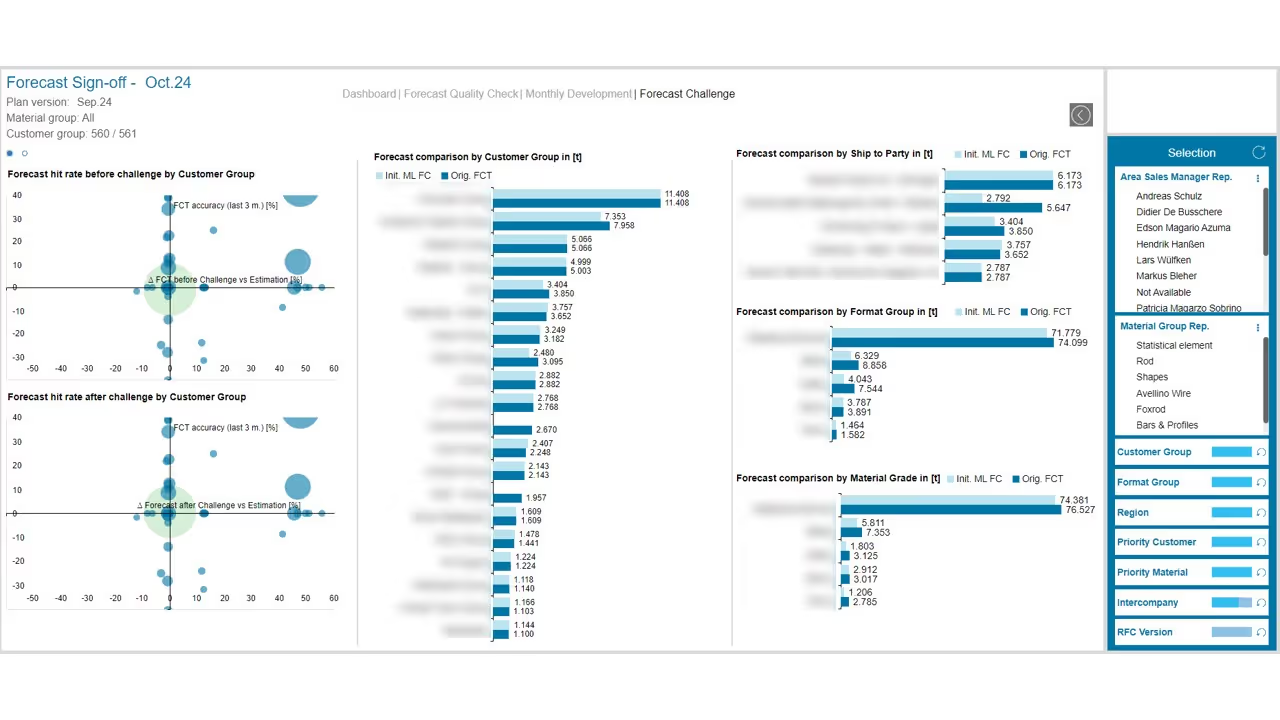
To ensure the most accurate forecasts and plausibility checks possible, the machine learning data is updated monthly, and the calculated values are automatically incorporated into the planning process. This makes it immediately clear whether customers are actually purchasing the agreed-upon quantities and what impact any deviations might have on future production planning.
Based on demand, the quantities are now allocated to the various plants, taking customer contracts into account. In particular, limitations regarding plant capacity for potential deliveries must be considered. If these capacities are exceeded at the plants, the system identifies potential order postponements at the week, material, and customer levels based on the homologation. However, since individual customers may only be served by specific plants for quality assurance purposes, homologation must be taken into account accordingly. It is therefore necessary to decide whether another plant can take over production or whether production must be shifted to a different week. These capacities are statistically determined based on historical plant activities and corrected by the S&OP Manager as needed.
Once the demands have been assigned to the plants, production planning can begin. To do this, production planners can run a mid-term simulation and create a short-term simulation. A performance matrix for the various production lines at the plants also allows users to enter the materials to be produced in tons, maintain the shifts on an hourly basis per day, or determine the shift times.
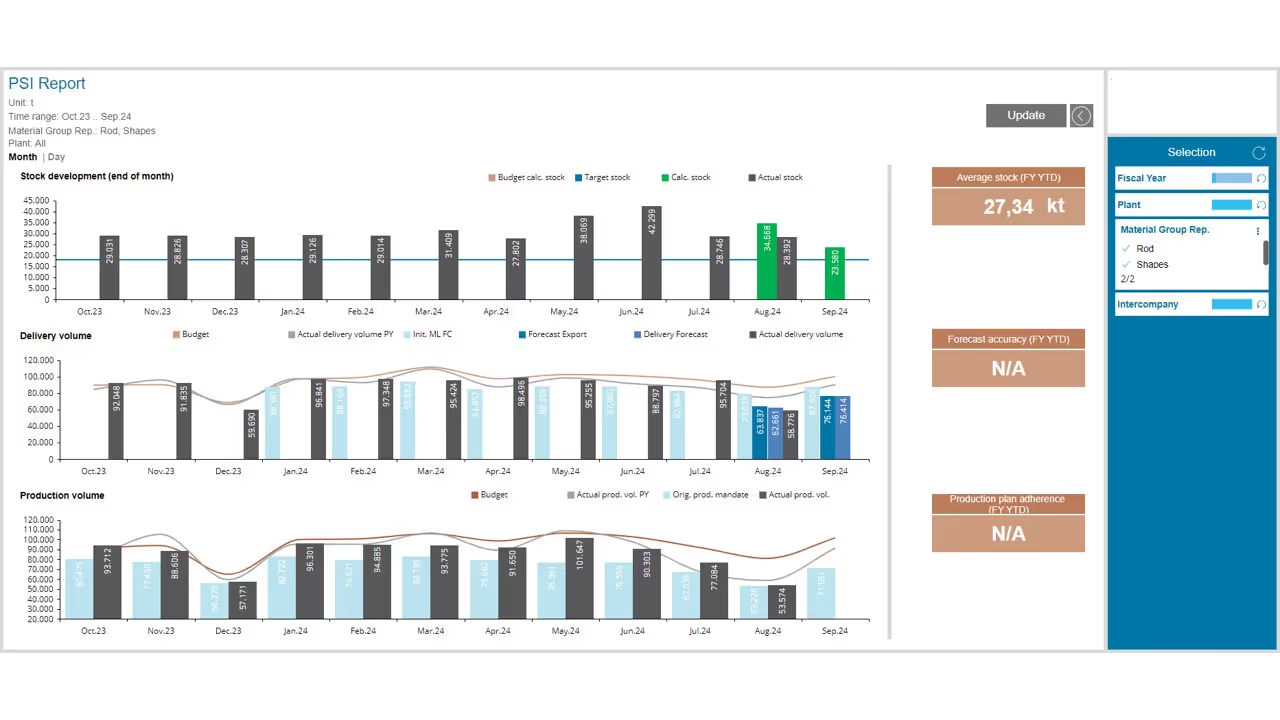
It is important to also factor in planned downtime for maintenance work. For example, if metal debris needs to be removed from the furnace due to contamination, the plant may be shut down for up to 14 days. These factors are also planned using the new S&OP module in Board, with the goal of shipping as much as possible beforehand while ensuring that inventory levels do not run out.
Thanks to the high level of transparency regarding planned demand and production, it is now possible to perform a coverage analysis on individual materials in order to optimize the "On Time In Full" (OTIF) KPI. If the desired quantities cannot be produced, the demand can be transferred from one plant to another through "reactive swapping" or shifted to a different week.
To optimize supply and demand management, S&OP managers also receive daily reports that allow them to monitor the balance between current inventory and demand. By comparing these figures with historical data, deviations can be analyzed in greater detail directly within the system via drill-down, and potential measures can be evaluated. For example, was there an unplanned shutdown that caused delays? Which plant could step in to help with which orders?
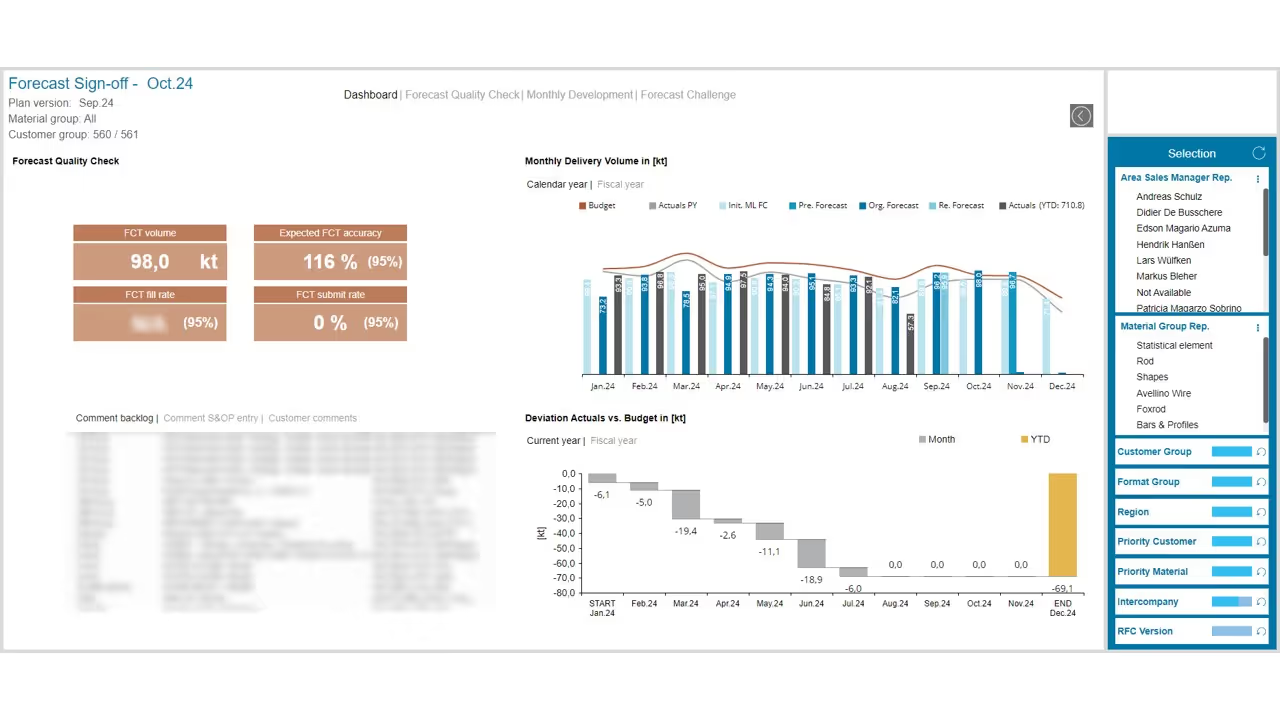
“Incorporating machine learning data has significantly improved our forecasts,” concludes Christoph Petzke. “Our planners receive very solid baseline figures and can apply their expertise in a targeted manner. This saves time and helps significantly reduce the error rate.”
Automatic validity checks provide additional assurance and confidence in the figures. The current 57 users also appreciate the intuitive usability of the planning system in their daily work. Real-time data and transparent processes make it possible to quickly implement appropriate countermeasures even in the event of unexpected occurrences. Customers also benefit from this: The goal of further improving on-time delivery was fully achieved with the introduction of the new forecasting methods.
“In metal smelting, we have a very complex end-to-end process, from customer demand to production,” explains Tim Nagel, Director of Group Sales & Operations Planning, describing the unique challenges at Aurubis. The project was therefore implemented iteratively and continuously optimized with clear goals for each phase. Over time, many additional applications were added in this way: from range analysis and simulation of minimum quantities to customer clustering. “We already have many more ideas for the future,” Tim Nagel concludes. “We’re pleased to have celver AG as a reliable and creative partner at our side who is working with us to achieve these goals.”

Your contact person
.avif)