BOMAG
.avif)
Learn how BOMAG transformed its global supply chain with an integrated sales and operations planning solution: automated SAP data integration, transparent forecasts, precise capacity planning, and up to a 50% reduction in inventory levels. The case study demonstrates how the company is significantly optimizing its processes through modern, data-driven planning and positioning itself for greater success in the future.
The Company: BOMAG
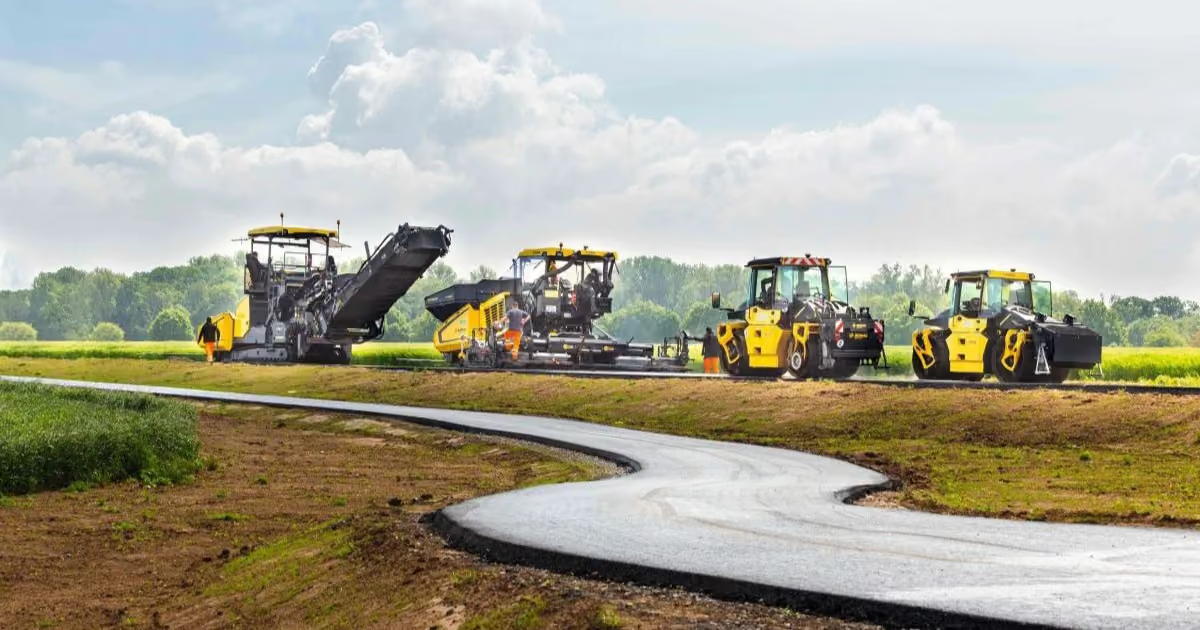
BOMAG is a global manufacturer of construction machinery and a technology partner for road and earthworks, headquartered in Boppard. In addition to its focus on soil and asphalt rollers, milling machines, and pavers, as well as walk-behind compaction equipment, the company offers a comprehensive portfolio of stabilizers and recyclers, as well as machines for waste compaction.
Through its machinery and digital solutions, the company enables the efficient and responsible expansion of road and transportation infrastructure. Founded in 1957 as “Bopparder Maschinenbau-Gesellschaft mbH,” the company now has six branches in Germany and operates globally through 12 independent subsidiaries.
With 2,500 employees worldwide and a sales and service network of over 500 dealers in 120 countries, the company offers its customers expert and responsive service on-site. BOMAG is part of the French FAYAT Group.
The facts at a glance:
✓ Automated data integration with SAP
✓ End-to-end visibility across the global supply chain
✓ More efficient coordination processes
✓ More precise demand management
✓ 50% reduction in inventory levels
The Challenge: Needs-Based Planning
As a global company with a broad range of products and services, striking the right balance between production and demand is of great importance to BOMAG. Seasonal demand curves, material deliveries, and production must be precisely coordinated to ensure that customer needs are met on time.
“Our existing planning processes were increasingly reaching their limits given the complex structures,” recalls Martin Kranz, MRP Planning Manager at BOMAG. “As a result, we sometimes produced machines that couldn’t be sold at short notice.” The result was a continuous buildup of inventory—with a correspondingly high capital tie-up effect. BOMAG’s goal was therefore to align sales and production more closely and to create a robust foundation for integrated Sales & Operations Planning (S&OP).
The company’s organizational structure presented a particular challenge. BOMAG operates within a global value chain characterized by various distribution channels, regional differences, and international production sites:
- The distribution network includes over 500 dealers in 120 countries as well as the company’s own warehouses. Demand varies by region and is subject to significant seasonal fluctuations in some cases.
- Production takes place at multiple locations in Europe, China, India, and the U.S. Each location has its own warehouses and can also operate as an independent sales unit.
- The product portfolio is diverse: With over 250 machine types and a wide range of optional equipment, there is a high degree of product variation. The various product lines each follow their own planning logic. Added to this are country-specific requirements and regular technical advancements.
These conditions led to a high degree of complexity in the planning process. BOMAG was therefore looking for a system-supported, integrated planning solution that takes into account both regional demand and production-specific capacities—while reliably reflecting the diverse requirements of the international organization. The planning solution was to be built on the existing SAP ERP system to enable seamless integration into company-wide processes.
The Solution: Holistic S&OP Planning
BOMAG therefore decided to implement an integrated Sales & Operations Planning (S&OP) system based on the Board planning platform.
“In addition to the technological aspects, a well-thought-out process design was particularly important to us,” says Martin Kranz, explaining the project’s requirements. In their search for an experienced partner that combines both methodological and technological expertise, they chose celver AG. The decisive factor was the holistic approach: “With celver AG, we get all services from a single source—from the initial concept through implementation to the support contract.”
Company-specific S&OP process
First, the existing processes were analyzed, specific requirements for key performance indicators were defined, and an optimized planning process tailored to BOMAG was developed. The new process integrates sales forecasts with capacity-based production planning and creates a transparent foundation for company-wide coordination.
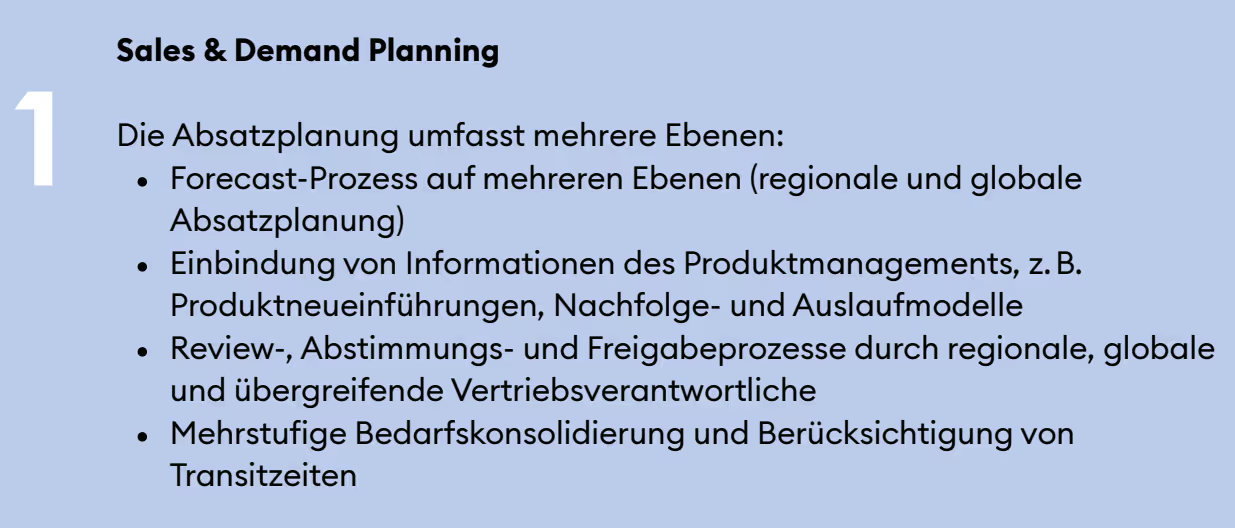
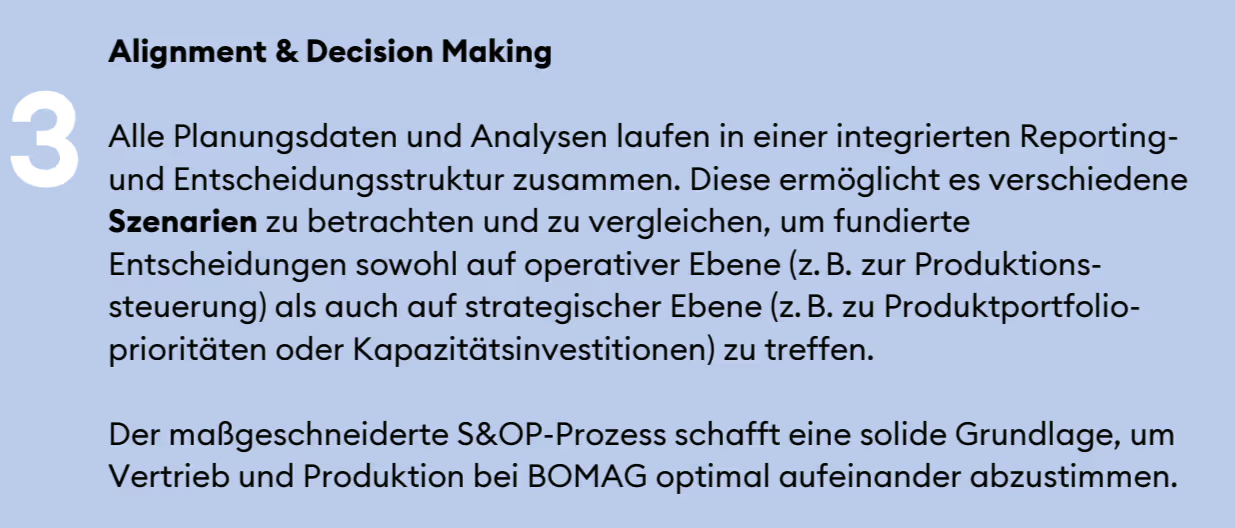
S&OP planning is based on three pillars: “Sales & Demand Planning,” “Operations Planning,” and “Alignment & Decision Making”:

End-to-end planning application in record time
To ensure rapid implementation of the proposed planning process, the BOSS (BOMAG Operations & Sales System) application was developed in Board based on the S&OP template from celver AG.
The application features a user-friendly, role-based interface with a clear, modular structure and supports end-to-end, integrated planning throughout the entire S&OP process.
Overview of key features and modules:
- Automated data integration with SAP:
Direct integration enables seamless access to relevant information from the ERP system. This ensures that all planning areas are supplied with consistent and up-to-date data—reducing manual effort, improving data quality, and creating a reliable foundation for informed decisions.
- Transparency across all levels:
TheWorkflow Status module provides an overview of the processing status within the planning cycles. This increases process reliability and ensures that all steps are completed on time.
- Sales Forecasting & Validation:
Modules such as SFC R12 and the Sales Validation Dashboards are used to create, analyze, and review sales forecasts. They support regional forecasts as well as annual planning and rolling scenarios. Net Demand per Sales Organization provides a consolidated view of sales demand at the organizational level.
- Production Planning & Capacity Control:
Production planning is carried out using specialized modules such as Production Planning & Simulation, Net Demand at Production Plant, and Capacity Demand/Supply. These modules enable precise planning and feasibility checks. In addition, functions such as Target Stock Level and Min. Stock Level at Production Plant support inventory-oriented and efficient program planning. Various scenarios can now also be taken into account. These scenarios can be simulated in SAP down to the lowest level and integrated into the coordination processes.
- Validation & Master Data Maintenance:
Under Data Validation, you will find modules for checking key planning data—e.g., item numbers, customer master data, inventory, and open orders. These checks ensure data quality during the ongoing process.
- Configurable Parameters & Adjustments:
Planning-related settings such as Capacity Parameters or Price Calculation can be maintained directly via the user interface.
Collaboration and Extensibility
“Viewing the entire S&OP process as a team has brought us closer together as a company,” says Martin Kranz, describing the project’s organizational impact. This is because the application not only maps the business process but also fosters collaboration across departments and regions. Role-based access controls, structured workflows, and commenting features ensure consistency and traceability.
At the same time, the system remains open to future expansions. Even now, in day-to-day operations, it is clear how working with the S&OP planning solution is generating new ideas and unlocking further potential. One possible future development is the integration of a mathematical evaluation of scenarios to enable even more KPI-driven planning.
With BOSS, BOMAG has established a digital foundation that integrates planning, data, and decision-making—efficiently, transparently, and scalably.
With the introduction of the new S&OP process and the BOSS planning application based on Board, BOMAG has taken another significant step toward integrated, forward-looking management of its global supply chain. The previous planning approaches in sales and production have been replaced by a consistent, coordinated methodology based on consolidated data, standardized processes, and clear responsibilities.
A key factor in this success is the automated data connection to SAP: This direct integration enables seamless access to relevant information from the ERP system. As a result, all planning areas are supplied with consistent and up-to-date data. This reduces manual effort, improves data quality, and creates a reliable foundation for informed decisions.
“By integrating sales forecasts, capacity planning, and material availability, we can now make planning decisions on a much more solid foundation,” explains Martin Kranz. Production volumes can be more precisely aligned with actual market demand, and overproduction and inventory buildup have been significantly reduced. At the same time, the application provides a clear view of bottlenecks, capacity utilization, inventory levels, and forecast trends—both operationally and strategically.
An integral part of the solution is a comprehensive set of scenario and simulation functions that enable users to evaluate alternative planning approaches and identify their impact on capacity, delivery capability, and inventory at an early stage. This significantly improves the quality of decision-making in the S&OP process.
The technical implementation based on Board has created a scalable platform that already enables a high level of maturity in integrated planning while remaining open to even deeper integration with adjacent processes, such as financial planning. BOMAG now has a digital foundation that sustainably improves planning quality and takes organizational collaboration to a new level.


Your contact person
.avif)